 ultimate-guide
Botox Cost in Houston: Pricing Breakdown & Flat Rates
Table of Contents
- What Is Botox and How Does It Work?
- Average Cost Per Unit and Factors Influencing Total Treatment Cost
- How Many Units of Botox Do I Need by Treatment Area?
- Flat-Rate Pricing vs. Per-Unit Pricing: What's the Difference?
- Botox Membership Programs and Long-Term Savings
- Botox for Jaw Tension Cost and Medical Applications
- Hidden Costs and What to Expect During Your Consultation
- Choosing a Qualified Provider: Credentials and Safety
- Frequently Asked Questions
Last Updated: September 27, 2026
What Is Botox and How Does It Work?
Botox is a purified form of botulinum toxin that temporarily relaxes facial muscles by blocking nerve signals. It prevents repetitive muscle movements that create dynamic wrinkles, smoothing the skin's surface without affecting surrounding tissue or facial expression when dosed correctly.
FDA-approved for cosmetic use on forehead lines, crow's feet, and glabellar lines, Botox also treats medical conditions like chronic migraines, excessive sweating, and jaw tension.
At Get Tox'd in Houston, our licensed medical professionals customize dosing for your specific facial anatomy and goals, with botox cost Houston varying based on your individual treatment needs. This personalized approach ensures results look natural and proportionate to your face, whether you're seeking preventative treatment or correction of existing lines.
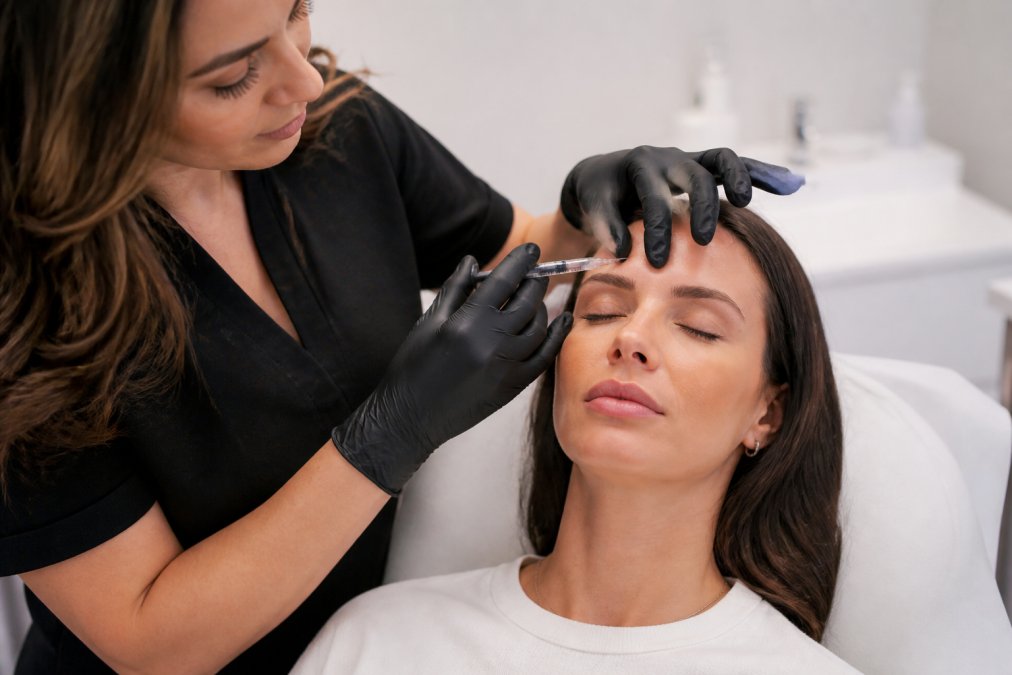
Results appear within 3-7 days, with full effects by two weeks, lasting approximately 3-4 months. This temporary, reversible nature makes Botox ideal for first-time users.
Average Cost Per Unit and Factors Influencing Total Treatment Cost
Understanding botox cost Houston depends on several factors. The most common pricing model charges per unit of product injected, with different providers using different unit counts for the same area, creating significant cost variation.
Cost factors include treatment area size, line depth and severity, facial anatomy, and product choice. Larger areas and deeper wrinkles require more units. Provider experience and location also affect pricing.
Botox, Xeomin, and Dysport are neuromodulators with different formulations and potencies. Some providers charge different rates for each; others maintain consistent pricing.
Get Tox'd uses flat-rate pricing by treatment area, eliminating surprise charges. You know the price upfront for forehead, crow's feet, glabellar lines, or combination treatments.
How Many Units of Botox Do I Need by Treatment Area?
Unit requirements vary by treatment area and facial structure, directly determining total cost when comparing per-unit pricing.
Forehead Lines Forehead lines typically require a customized number of units depending on depth and size. For specific pricing, please refer to Get Tox'd's flat-rate pricing.
Glabellar Lines (Between Eyebrows) Glabellar lines usually need a customized number of units, with results visible within 3-5 days. For specific pricing, please refer to Get Tox'd's flat-rate pricing.
Crow's Feet Crow's feet require a customized number of units total for both sides. For specific pricing, please refer to Get Tox'd's flat-rate pricing.
Combination Treatments (Most Common) A typical combination of forehead, glabellar lines, and crow's feet requires a customized number of units total. For specific pricing, please refer to Get Tox'd's flat-rate pricing.
Preventative Botox (Younger Patients) Preventative treatment for patients in their late 20s and early 30s typically uses a customized number of units total. For specific pricing, please refer to Get Tox'd's flat-rate pricing.
Medical Applications: Jaw Tension and Bruxism Jaw tension treatment requires a customized number of units total for both sides. For specific pricing, please refer to Get Tox'd's flat-rate pricing. Some insurance plans may cover this medical treatment; please check with your provider.
Excessive Sweating (Hyperhidrosis) Excessive sweating treatment requires a customized number of units for underarms. For specific pricing, please refer to Get Tox'd's flat-rate pricing.
How to Estimate Your Personal Cost To estimate your cost: identify treatment areas, use the unit ranges above, multiply by per-unit price or ask for flat-rate pricing, and add 10-20% for deeper lines or larger facial structure. A consultation with a qualified provider is the only way to get an accurate quote.
Flat-Rate Pricing vs. Per-Unit Pricing: What's the Difference?
The pricing model your provider uses dramatically affects your total cost and your experience as a patient. Understanding the difference between flat-rate pricing vs. per-unit pricing helps you make an informed decision about where to get treated.
Per-unit pricing charges for each unit injected. The advantage is transparency; the disadvantage is unpredictability, providers may quote lower counts initially, then recommend additional units during treatment.
Flat-rate pricing charges one price per treatment area regardless of units. Get Tox'd uses this model. The advantage is complete cost predictability; the disadvantage is you can't see exact unit counts, though a qualified provider explains their dosing strategy.
Flat-rate pricing also eliminates the incentive for providers to underdose you initially to keep the quoted price low. Your provider's goal is natural-looking results for your specific face, not maximizing unit count or minimizing cost.
Botox Membership Programs and Long-Term Savings
Botox membership programs offer discounted rates, priority scheduling, and complimentary touch-ups. The Get Tox'd Club provides ongoing access at discounted rates with free touch-ups included. Memberships make financial sense if you plan to continue treatments for at least 6-12 months.
Botox for Jaw Tension Cost and Medical Applications
Jaw tension treatment (masseter Botox) addresses teeth grinding and jaw clenching. It typically requires a customized number of units per side. Some insurance plans may cover this medical application. Results appear within 1-2 weeks and last approximately 3-4 months.
Hidden Costs and What to Expect During Your Consultation
Understanding hidden costs before consultation helps you budget accurately and compare providers fairly.
Consultation Fees Some practices charge for initial consultations; Get Tox'd offers free consultations. Ask upfront whether any fee is credited toward treatment if you proceed.
Touch-Up and Follow-Up Fees Touch-ups within 2 weeks may or may not be included. Ask your provider's specific policy: Is the first touch-up included? Are subsequent touch-ups charged at full price or discounted?
Product Upsells and Alternatives Some providers charge a premium for Dysport or Xeomin; others maintain flat pricing. Dermal fillers, laser treatments, or skincare products are separate costs.
Numbing and Comfort Add-Ons Most practices include topical numbing cream in the treatment price. However, some practices may charge extra for premium numbing options like dental blocks or nitrous oxide if you have low pain tolerance. Ask whether numbing is included or if additional comfort measures cost extra.
Post-Treatment Products Some practices recommend post-treatment serums, LED light therapy, or skincare packages to optimize results. Quality results depend on proper injection technique and dosing, not post-treatment products. These are nice-to-have add-ons, not requirements.
Membership or Package Pricing If you commit to a membership or package of multiple treatments, the per-unit or per-area cost may offer savings. However, membership programs often require upfront payment or monthly commitments. Clarify cancellation policies and what happens if you move or change providers.
What to Expect During Your Consultation: A Detailed Breakdown
A thorough consultation typically lasts 20-30 minutes and should include:
Medical History and Contraindications Your provider should ask about pregnancy, breastfeeding, neuromuscular disorders, medications (especially blood thinners), allergies, and previous adverse reactions to injectables. These questions identify whether Botox is safe for you. If you have myasthenia gravis, Lambert-Eaton syndrome, or other neuromuscular conditions, Botox may be contraindicated. Honest disclosure here prevents complications.
Facial Analysis and Photography The provider should examine your face at rest and during movement (raising eyebrows, frowning, squinting). They should take baseline photos for comparison after treatment. This analysis determines which muscles are overactive and how many units you'll need. A provider who spends time on this step is more likely to deliver natural results tailored to your face.
Discussion of Goals and Realistic Outcomes Be specific about what you want: Do you want to eliminate lines completely, or soften them while maintaining some movement? Do you want a subtle preventative approach, or more dramatic smoothing? A good provider explains the trade-off between eliminating lines and maintaining natural facial expression. Overly aggressive dosing creates the "frozen" appearance many patients want to avoid.
Total Cost Breakdown Before you leave the consultation, you should have a clear, written quote that includes:
- Treatment area(s) and unit count (if per-unit pricing)
- Cost per area or per unit
- Any touch-up policy and whether touch-ups are included
- Total cost for your specific treatment
- Any additional fees (consultation fee credit, product upsells, etc.)
- Membership or package discounts if applicable
Red Flags During Consultation
Be cautious if a provider:
- Quotes an unusually low price (significantly below market rate for your area), which may indicate counterfeit product or inexperienced injectors
- Refuses to explain their dosing strategy or unit count
- Pressures you to add unnecessary treatments or products
- Cannot provide before-and-after photos or credentials
- Offers "lifetime results" or guarantees that results will never fade
- Charges consultation fees that are non-refundable and not credited toward treatment
- Seems rushed or unwilling to answer detailed questions
Choosing a Qualified Provider: Credentials and Safety
Your provider's qualifications directly affect treatment safety, result quality, and your overall experience. Not all providers administering Botox have equivalent training or credentials.
Frequently Asked Questions
How much does Botox typically cost per unit in Houston?
Per-unit pricing varies depending on the provider and the type of neurotoxin used (Botox, Xeomin, or Dysport). However, many patients find flat-rate pricing models more predictable, as they eliminate the anxiety of not knowing how many units they'll need before treatment. Visit your provider's pricing page or schedule a free consultation to get an accurate quote for your specific needs.
What's the difference between flat-rate and per-unit Botox pricing?
Per-unit pricing charges you for each unit of the neurotoxin injected, which means the final cost depends on how many units your provider determines you need. Flat-rate pricing, by contrast, covers a specific treatment area for one fixed price, regardless of how many units are required. Flat-rate models eliminate surprise charges and the stress of not knowing your total cost upfront. They're especially valuable for patients who need varying amounts of product across different facial areas or who want consistent, predictable budgeting for ongoing maintenance.
How many units of Botox do I need for forehead wrinkles?
Forehead wrinkles typically require a customized number of units of Botox, depending on the depth of your lines, muscle mass, and desired results. Factors like age, skin elasticity, and whether you're seeking preventative or corrective treatment all influence dosage. A qualified provider will assess your facial anatomy during a consultation and customize the dosage for your specific needs. Some patients need fewer units for subtle prevention, while others with deeper dynamic wrinkles may benefit from higher dosages for more noticeable wrinkle reduction.
Are Botox membership programs worth the cost?
Membership programs can provide significant savings if you commit to regular maintenance treatments. Since Botox results typically last 3–4 months, consistent clients benefit from predictable, discounted pricing that spreads the cost across the year. Memberships often include perks like free touch-ups, priority scheduling, and reduced rates per treatment. Before enrolling, confirm there are no cancellation penalties and that the membership terms align with your treatment schedule. For patients planning ongoing facial rejuvenation, memberships eliminate the financial surprise of repeated full-price treatments.