 ultimate-guide
Botox for Jaw Tension: A Complete Guide
Table of Contents
- What Is Botox and How It Works for Jaw Tension
- Understanding Jaw Tension: TMJ, Bruxism, and Muscle Overactivity
- Botox for TMJ: Targeting the Masseter and Temporalis Muscles
- How Long Does Masseter Botox Last and What to Expect
- Botox for Jaw Clenching: Treatment Process and Results
- Masseter Botox Side Effects and What You Should Know
- Conservative Alternatives and When to Consider Botox
- Is Botox for Jaw Tension Right for You: Candidacy and Planning
- Frequently Asked Questions
Last Updated: October 5, 2026
What Is Botox and How It Works for Jaw Tension
Botox is a purified form of botulinum toxin that temporarily paralyzes muscles by blocking acetylcholine release at the neuromuscular junction (BOTULINUM TOXIN). Injected into overactive jaw muscles, it reduces contraction force and frequency, relieving jaw tension and related discomfort, making Botox for jaw tension an increasingly popular therapeutic use beyond cosmetics.
For jaw tension, this means fewer involuntary clenches, less grinding, and reduced strain on the temporomandibular joint. Results typically appear within 3-7 days, with full effects around two weeks.
At Get Tox'd, we use Botox, Xeomin, and Dysport, all neuromodulators with the same active mechanism but slight differences in formulation and onset time. Our licensed medical providers customize the dose based on your individual anatomy and the severity of your jaw muscle activity, ensuring results that address your specific tension patterns without over-relaxation.
Cosmetic Botox targets wrinkles from repeated muscle movement; therapeutic Botox for jaw tension targets the muscle overactivity itself. This is an off-label application, the FDA has not formally approved it for this indication, but clinical evidence and practitioner experience support its effectiveness for jaw clenching, teeth grinding, and TMJ-related discomfort.
Understanding Jaw Tension: TMJ, Bruxism, and Muscle Overactivity
Jaw tension stems from interconnected sources: temporomandibular joint dysfunction (TMD), bruxism (teeth grinding), and chronic muscle overactivity. Identifying the root cause helps determine whether Botox is right or conservative measures should come first.
The temporomandibular joint connects your lower jaw to your skull and allows movement for chewing, speaking, and yawning. When this joint becomes inflamed or misaligned, a condition called temporomandibular disorder (TMD), it triggers muscle guarding, where surrounding muscles tighten protectively. Over time, this protective tension becomes habitual and painful.
Bruxism, or teeth grinding, often occurs during sleep and is frequently stress-related. The masseter (along the side of your jaw) and temporalis (spanning the temples) bear the brunt of this force, wearing down teeth, straining the jaw joint, and creating chronic tension that radiates into the neck and shoulders.
Stress and anxiety amplify these patterns: under pressure your jaw tightens, and repeated tightening leaves muscles partially contracted even at rest, myofascial pain that becomes self-perpetuating.
Diagnosis typically involves a physical exam and sometimes imaging like MRI or X-ray to rule out structural damage. A dentist or physician assesses bite alignment, joint clicking or popping, and muscle tenderness; once structural issues are ruled out, muscle overactivity becomes the primary treatment target.
Botox for TMJ: Targeting the Masseter and Temporalis Muscles
The masseter and temporalis are the primary targets for therapeutic Botox for jaw tension because they generate the most force during clenching and grinding. The masseter, on the outer surface of the lower jaw, is one of the strongest muscles relative to its size; the temporalis, above the ears, works with it to close the jaw with tremendous force.
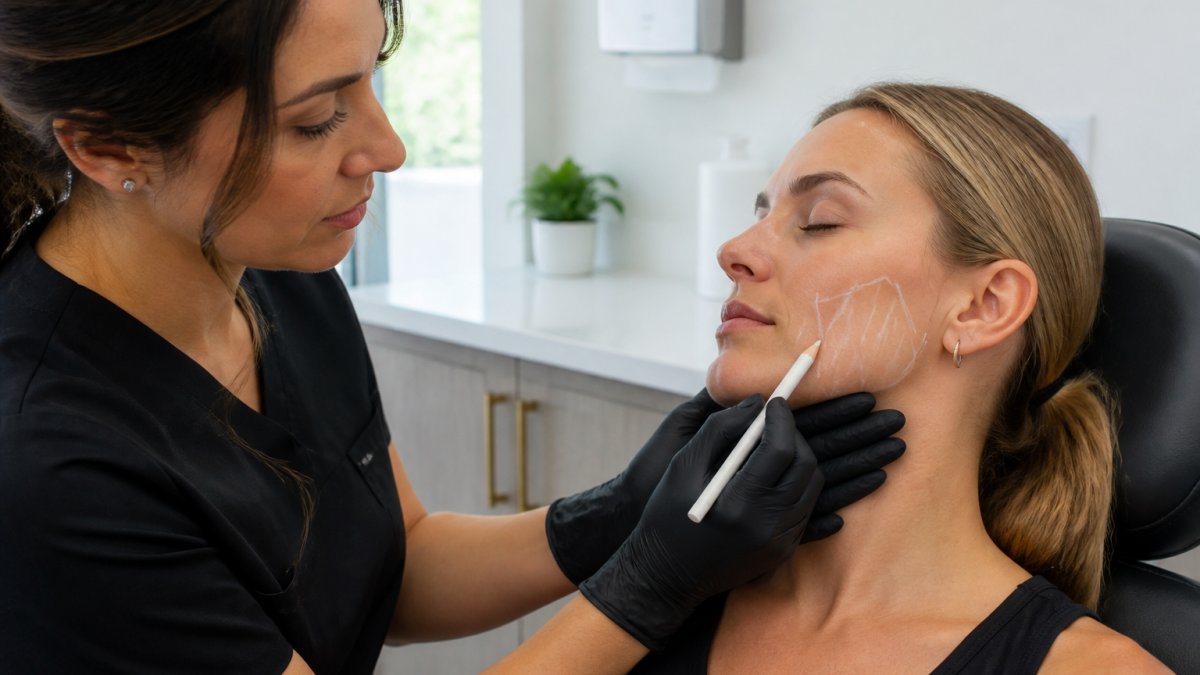
Botox injections reduce these muscles' contractile force. A typical treatment uses multiple small injections across the masseter and temporalis for balanced relaxation, not complete paralysis, which would impair chewing, but a 20-40% reduction in strength that interrupts the clenching cycle without compromising function.
Injection placement requires anatomical precision. Our providers at Get Tox'd identify facial landmarks to locate the muscle belly and avoid structures like the buccal branch of the facial nerve.
Results in the masseter and temporalis are often noticeable within days: less clenching force, fewer wake-up headaches, and reduced tension radiating into the neck. Some notice their jaw appears slightly less squared or prominent, a cosmetic side effect some welcome and others adjust to.
How Long Does Masseter Botox Last and What to Expect
The duration of Botox for jaw tension typically ranges from three to four months, though variation is significant, some patients maintain results for five months, others notice softening around the 10-week mark. This depends on your metabolism, muscle mass, and how quickly your body breaks down the toxin.
The timeline is predictable: days 1-3 bring subtle changes in clenching force, days 4-7 a more noticeable reduction in muscle activity, and by day 14 results peak. From there the effect gradually diminishes until the muscle regains its original strength.
Maintenance requires repeat injections every 3-4 months. Some practitioners recommend scheduling your next appointment around the 10-week mark, before tension fully returns, to prevent the boom-and-bust cycle of relief followed by worsening symptoms.
At Get Tox'd, our membership program and free touch-up policy make maintenance straightforward. Members receive discounted or included treatments, and we schedule follow-ups based on your response pattern. After your first injection, we track when you feel the effects wearing off and adjust your schedule accordingly.
First-time patients often ask whether results improve with repeated treatments. There's no scientific evidence Botox becomes more effective over time, but some patients report that consistent treatment prevents jaw muscles from re-strengthening to their original size, maintaining a lower baseline of tension than sporadic treatment.
Botox for Jaw Clenching: Treatment Process and Results
The treatment process for Botox for jaw clenching takes approximately 15-20 minutes. Your provider begins with a consultation assessing your clenching patterns, jaw anatomy, and goals, asking about symptoms, when clenching is worst, nighttime grinding, and previous treatments.
The injection itself involves minimal discomfort: a very fine needle delivers small amounts of Botox directly into the masseter and temporalis. Some patients feel a slight pinch; others feel almost nothing. We typically skip numbing cream because the discomfort is minimal and injections are quick.
After treatment, slight swelling or redness at injection sites resolves within hours, and you can return to normal activities right away, there's no downtime. Avoid strenuous exercise and heat exposure for 24 hours to let the toxin settle into the muscle tissue.
Results emerge gradually: reduced clenching force and less jaw fatigue in the first week, full effect by week two. Many patients sleep better as nocturnal grinding diminishes and morning headaches improve, and neck and shoulder tension often decreases since jaw tension radiates into surrounding muscles.
Measurable outcomes include reduced tooth wear, less jaw pain with chewing, fewer tension headaches, and improved sleep. Some patients' dentists notice less wear at follow-ups; others describe a facial and jaw relaxation they hadn't felt in years.
Masseter Botox Side Effects and What You Should Know
Side effects from Botox for jaw tension are generally mild and temporary. The most common is localized swelling, bruising, or tenderness at injection sites, which resolves within a few days. Some patients experience a slight headache in the hours after treatment, typically manageable with over-the-counter pain relief.
More specific to jaw and masseter injections is temporary chewing weakness, usually mild and lasting days to weeks as the body adjusts.
Book now your FREE consultation →
Asymmetry can occur if one side receives more relaxation than the other, causing uneven appearance or unbalanced chewing. This is correctable with a touch-up injection, and at Get Tox'd our free touch-up policy covers adjustments like this at no extra charge.
Allergic reactions to Botox itself are extremely rare. Reactions to the injection procedure, such as vasovagal syncope (fainting), are more common, though still uncommon. Inform your provider if you have a history of fainting with injections so they can take precautions.
Long-term side effects from repeated treatment are not well-documented since the therapy is relatively new for jaw tension. The toxin does not accumulate; it is metabolized and cleared.
Pregnancy and breastfeeding are contraindications. While Botox has not been shown to harm a developing fetus, it is not recommended during pregnancy or nursing out of an abundance of caution. Similarly, patients with neuromuscular disorders should avoid Botox without consulting their neurologist.
Conservative Alternatives and When to Consider Botox
Before pursuing Botox, many patients benefit from conservative approaches that should typically be tried first, especially for mild to moderate symptoms.
Physical therapy and jaw exercises are foundational: a therapist can teach targeted stretches for the masseter, temporalis, and neck muscles plus exercises to improve jaw alignment and reduce compensatory tension. Most patients need 4-8 weeks of regular practice to see meaningful improvement.
Stress management and behavioral modification address the root cause for many patients. Progressive muscle relaxation, meditation, and cognitive behavioral therapy reduce stress-driven clenching; simply becoming aware of daytime clenching lets some patients consciously relax their jaw and break the cycle over time.
Occlusal appliances like a nightguard or bite splint protect teeth from grinding damage and reduce muscle strain by promoting a neutral jaw position.
Heat and massage provide temporary relief: a warm compress for 15 minutes several times daily relaxes muscles and improves blood flow, and gentle circular self-massage of the masseter and temporalis eases tension. A professional massage therapist experienced with jaw tension can provide deeper relief.
NSAIDs like ibuprofen reduce inflammation and pain, though they address symptoms rather than the underlying muscle overactivity. They're useful for acute flare-ups but not a long-term solution.
When to consider Botox: if conservative approaches for 8-12 weeks haven't provided adequate relief, if symptoms significantly impact sleep or daily function, or if grinding is causing dental damage.
Is Botox for Jaw Tension Right for You: Candidacy and Planning
Good candidates for Botox for jaw tension are adults with confirmed clenching or grinding, ideally diagnosed by a dentist or physician.
Ideal candidates have tried conservative approaches without sufficient relief, or have severe symptoms warranting faster intervention, if tension headaches are disabling or grinding is damaging your teeth, Botox may be justified earlier.
You should be in good general health and not pregnant or breastfeeding. Inform your provider of any neuromuscular disorders, bleeding disorders, or medications that affect clotting, as these may influence treatment safety.
Realistic expectations are critical: Botox reduces clenching force and associated tension but won't eliminate stress or resolve sleep problems. You may still grind at night, but with less force and damage.
Cost and commitment matter: Botox requires repeat injections every 3-4 months, a significant yearly investment. At Get Tox'd, flat-rate pricing removes the uncertainty of unit-based billing, and our membership program offers savings for ongoing treatment.
A consultation with a qualified provider is the essential first step.
Our team at Get Tox'd offers free consultations to help you determine if Botox for jaw tension is the right choice.
Jaw tension disrupts sleep, triggers headaches, and wears down your teeth, and conservative approaches don't always provide relief. Get Tox'd specializes in therapeutic Botox for jaw tension, delivered by licensed medical providers who customize your dose for natural results and genuine relief.
Frequently Asked Questions
Can Botox actually help relieve jaw tension?
Yes. Botox works by relaxing the masseter and temporalis muscles, which are the primary muscles involved in jaw clenching and teeth grinding. When these muscles are overactive, they create tension, pain, and muscle fatigue. By reducing muscle contractions, Botox can decrease clenching force and provide symptom relief for jaw-related discomfort. Results typically appear within 3-7 days, with full effects by two weeks.
How long does masseter Botox last?
Masseter Botox typically lasts 3-4 months. The duration varies by individual metabolism, muscle mass, and how frequently you receive injections. Some patients experience results lasting closer to 3 months, while others see effects extend toward 4-5 months with repeat treatments. Most patients schedule maintenance injections every 12-16 weeks to maintain consistent symptom relief and muscle relaxation.
What are the main side effects of masseter Botox?
Common side effects are mild and temporary, including bruising, swelling, or redness at injection sites. Rare but possible effects include jaw weakness, difficulty chewing, or temporary asymmetry if dosing is unbalanced. Infection at injection sites is uncommon when performed by licensed medical professionals using sterile technique. Most side effects resolve within 1-2 weeks. Serious complications are rare when treatment is administered by qualified providers.
Is Botox for jaw tension FDA-approved?
The FDA approved botulinum toxin (Botox) for cosmetic use in 2002 and for chronic migraine in 2010. Jaw tension and bruxism treatment is considered off-label use, meaning it is not specifically FDA-approved for these indications but is legally and commonly prescribed by physicians for this purpose. Off-label use is standard medical practice when supported by clinical evidence and patient-provider discussion.
How many units of Botox are typically used for jaw tension?
Dosing varies significantly based on muscle mass, severity of clenching, and individual anatomy. Treatment typically ranges from 20-50+ units per side, with men often requiring higher doses due to larger muscle mass. Qualified providers customize dosing to your specific face rather than using a standard amount. Get Tox'd uses flat-rate pricing based on treatment area, so your cost remains predictable regardless of the exact units needed to achieve results.