 ultimate-guide
Botox for Excessive Underarm Sweating: Complete Guide
Table of Contents
- What Is Excessive Underarm Sweating and How Botox Helps
- How Botox Works to Stop Axillary Hyperhidrosis
- Who Is a Candidate for Underarm Botox Treatment
- What Happens During Your Botox for Underarm Sweating Appointment
- How Long Does Botox for Excessive Underarm Sweating Last
- Botox for Sweaty Armpits Side Effects and What to Expect
- Underarm Botox for Sweating Cost and Insurance Coverage
- Underarm Hyperhidrosis Treatment Options Beyond Botox
- Frequently Asked Questions
Last Updated: October 12, 2026
What Is Excessive Underarm Sweating and How Botox Helps
Excessive underarm sweating, medically known as axillary hyperhidrosis, is a condition where the sweat glands in the underarm area produce significantly more perspiration than the body needs for temperature regulation. Unlike normal sweating triggered by heat or stress, primary hyperhidrosis occurs without an obvious external cause and can profoundly affect quality of life through visible sweat stains, odor concerns, and social anxiety.
Botox for excessive underarm sweating offers a medical solution by blocking the nerve signals that trigger sweat production. The treatment works by preventing acetylcholine, the chemical messenger that tells sweat glands to activate, from reaching these glands. When the signal is blocked, sweat production in the treated area drops dramatically, often by 82-87% according to clinical evaluations.
This approach differs fundamentally from antiperspirants. While prescription antiperspirants and topical medications work on the skin's surface, Botox for underarm sweating addresses the problem at its source: the nerve-to-gland connection. The result is a non-surgical, predictable treatment that can restore confidence and comfort without systemic side effects.
At Get Tox'd, we understand that excessive sweating isn't just a cosmetic concern, it's a medical condition that deserves proper evaluation and treatment. During your consultation, our licensed medical injectors can discuss your concerns, review your treatment options, and help determine whether underarm tox is appropriate for you.
How Botox Works to Stop Axillary Hyperhidrosis
The mechanism behind Botox for excessive underarm sweating centers on botulinum toxin, specifically onabotulinumtoxinA, which interrupts communication between nerves and sweat glands. When injected into the underarm tissue, the toxin blocks the release of acetylcholine at the neuromuscular junction, the point where nerve signals would normally trigger the gland to produce sweat.
This blockade is temporary but highly effective. The sweat glands themselves remain intact and healthy; they simply receive no signal to activate. Over time, the body gradually metabolizes the toxin, and nerve function returns, which is why the treatment requires periodic re-application.
Clinical studies have demonstrated consistent results with this approach. Patients typically experience significant reduction in sweat production within days of treatment, with full effect developing over the first week or two. The reduction persists for months, making it a practical solution for people who find daily antiperspirant use inadequate or irritating.
The beauty of this mechanism is its specificity. Botox affects only the injected area, the underarms, without impacting sweat production elsewhere on the body. This localized action means patients retain normal thermoregulation and sweating in other areas where it's needed.
Who Is a Candidate for Underarm Botox Treatment
Not everyone with excessive sweating is an ideal candidate for Botox for excessive underarm sweating, and a proper clinical evaluation is essential before proceeding. Candidates typically meet these criteria:
- Diagnosis of primary or secondary axillary hyperhidrosis confirmed through clinical assessment or the minor starch-iodine test
- Symptoms that significantly impact daily life, visible sweat rings, frequent clothing changes, or social avoidance
- Failed or inadequate response to prescription antiperspirants or topical medications
- No contraindications such as pregnancy, neuromuscular disease, or certain medications
- Realistic expectations about the temporary nature of results
- Commitment to repeat treatments every six months to one year
A clinical evaluation typically includes a detailed history of sweating patterns, assessment of the severity and distribution of symptoms, and discussion of previous treatment attempts. Some providers use the starch-iodine test, which highlights the exact areas of excessive sweating using iodine and starch, helping guide precise injection placement.
Age is not an absolute barrier. While most candidates are adults, the condition can affect teenagers, and treatment may be appropriate in cases of severe, life-altering hyperhidrosis.
Pregnancy and breastfeeding are generally considered reasons to defer treatment. Certain neuromuscular conditions and medications that affect nerve-muscle communication may contraindicate Botox use. A thorough medical history during your consultation ensures safety.
What Happens During Your Botox for Underarm Sweating Appointment
Your Botox for excessive underarm sweating appointment typically follows a structured process designed for comfort and precision. Most sessions last 15-30 minutes from start to finish.
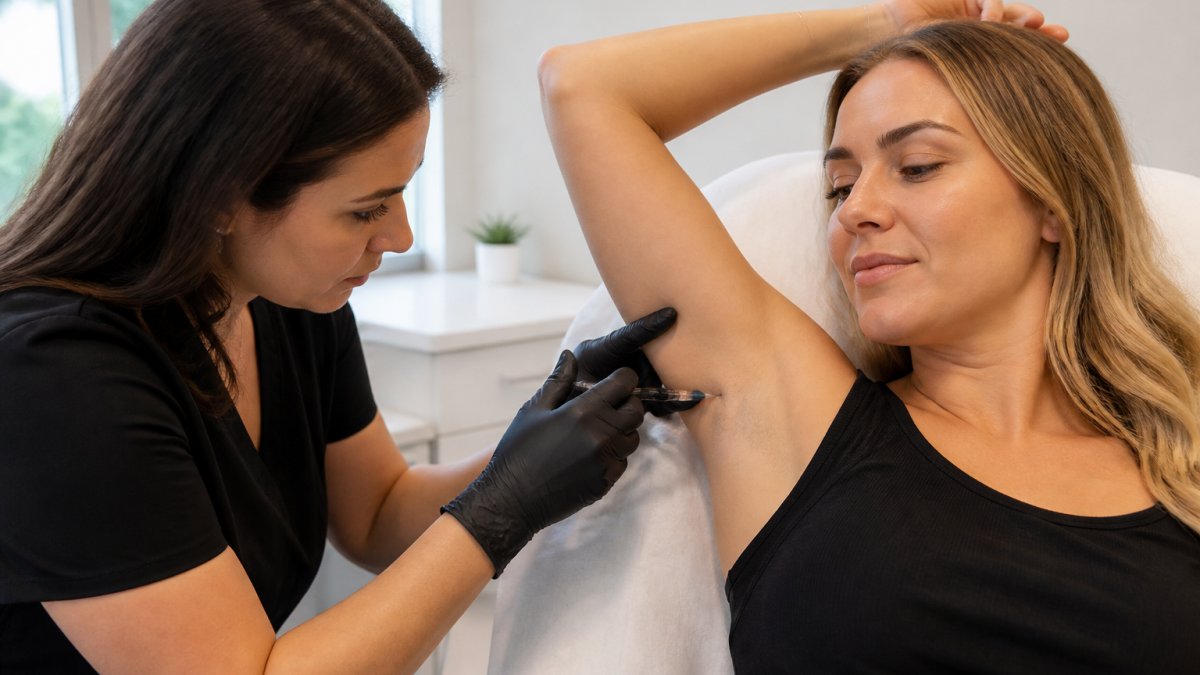
The appointment begins with a brief consultation where your provider reviews your medical history, discusses your sweating concerns, and confirms your candidacy.
Next comes treatment-area mapping. Your provider may apply the starch-iodine test to identify the precise zones where sweating is most active, ensuring injections target the right locations.
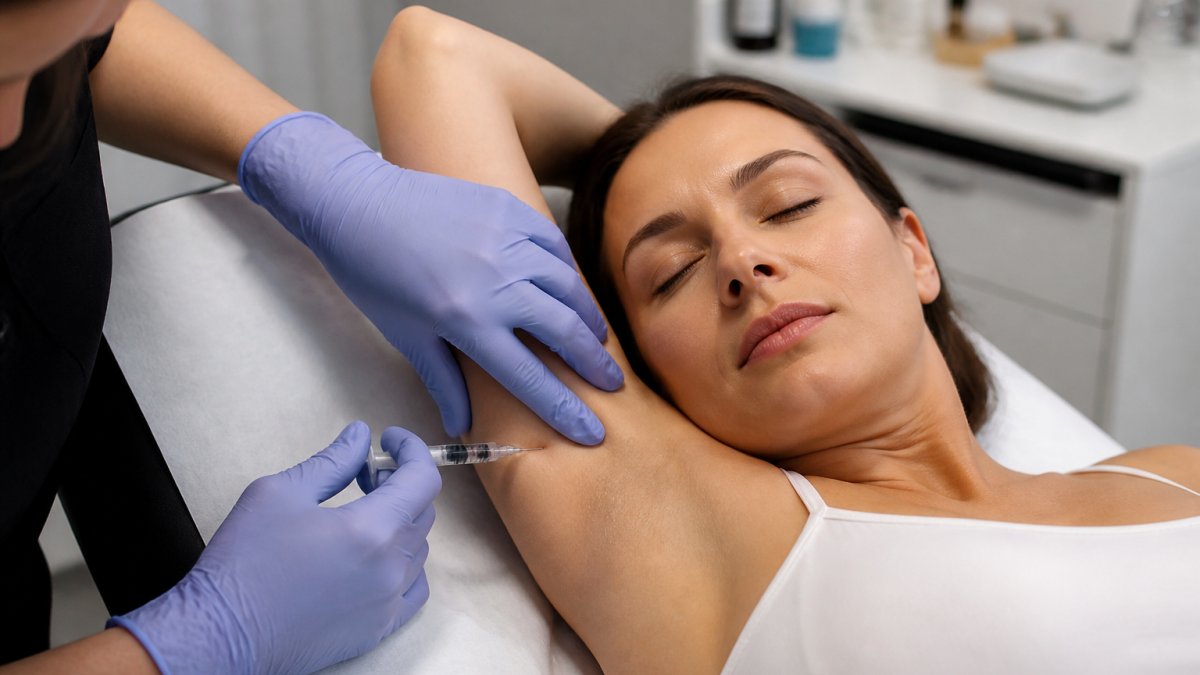
Before injections begin, the underarm area is cleansed and may be numbed with a topical anesthetic or ice pack to minimize discomfort. Many patients report the procedure feels like small pinches rather than painful injections.
Your provider will then administer multiple small intradermal injections across the underarm, spacing them to cover the entire treatment area.
After injections are complete, the area may be gently cleaned, and you're free to leave immediately. There's no downtime, and you can return to normal activities right away, though some providers recommend avoiding strenuous exercise for 24 hours.
How Long Does Botox for Excessive Underarm Sweating Last
The duration of Botox for excessive underarm sweating is one of its defining characteristics: results typically last at least six months, with many patients experiencing benefits for seven to twelve months before retreatment becomes necessary.
The timeline unfolds in stages. Within 48 hours of injection, most people notice a reduction in underarm sweating. The effect continues to improve over the first week as the toxin fully blocks acetylcholine release. By day seven to ten, you've usually reached maximum sweat reduction.
This temporary nature is actually an advantage. If any unexpected effects occur, which is rare, they will resolve naturally as the body metabolizes the toxin. There's no permanent alteration to your sweat glands or nervous system.
The duration varies slightly between individuals based on metabolism, muscle mass, and how quickly their body breaks down the toxin. Some patients need retreatment every six months; others go nine to twelve months between appointments.
Many patients choose to schedule their next appointment before symptoms fully return, maintaining consistent dryness year-round. This approach prevents the frustration of waiting until excessive sweating resurfaces. At Get Tox'd, our membership options make it convenient to stay consistent with your treatment schedule without worrying about hidden costs.
Botox for Sweaty Armpits Side Effects and What to Expect
Botox for excessive underarm sweating is generally well-tolerated, but like any injection procedure, it carries potential side effects. Understanding these helps you prepare and know what's normal.
The most common side effects are mild and temporary. Injection-site pain, redness, and minor bruising may occur at the injection sites. These typically resolve within a few days.
Book now your FREE consultation →
Muscle weakness in the underarm is rare when injections are properly placed, but it's a theoretical risk.
Allergic reactions to Botox itself are extremely uncommon. More commonly, patients may react to the preservatives in the formulation or have sensitivity to the injection process itself.
Some patients report temporary compensatory sweating in other body areas, increased perspiration on the back, chest, or face, as the body attempts to maintain overall temperature regulation.
Precautions before treatment include disclosing all medications, supplements, and medical conditions. Certain medications that affect bleeding or nerve function may require adjustment.
After treatment, avoid touching or massaging the injection sites for several hours, as this could cause toxin migration. Skip intense exercise for 24 hours.
Most people experience no side effects at all. When they do occur, they're minor and resolve without intervention. Serious complications are exceptionally rare when treatment is administered by qualified medical professionals.
Underarm Botox for Sweating Cost and Insurance Coverage
The cost of Botox for excessive underarm sweating varies based on treatment area size, the amount of toxin needed, and your provider's pricing structure. Unlike some clinics that charge per unit, creating uncertainty about your final bill, at Get Tox'd, we believe in transparent, flat-rate pricing.
Insurance coverage for underarm Botox for sweating depends on your specific policy and whether your condition qualifies as medically necessary rather than cosmetic. Many insurance plans do cover hyperhidrosis treatment if you've documented the condition and failed conservative treatments like prescription antiperspirants first. Your provider can help determine your coverage eligibility.
Many aesthetic and medical practices offer financing options or membership plans to make treatment more accessible. These arrangements can spread costs over time or provide savings for regular patients. At Get Tox'd, we offer membership options that make consistent treatment more affordable and convenient, with free touch-ups included to ensure your results stay optimal.
Underarm Hyperhidrosis Treatment Options Beyond Botox
While Botox for excessive underarm sweating is highly effective, it's not the only option available. Understanding alternatives helps you make an informed decision about what's right for your situation.
Prescription antiperspirants containing aluminum chloride hexahydrate are often the first-line treatment. These work by blocking sweat ducts at the skin surface and are considerably less expensive than Botox.
Iontophoresis uses electrical current to temporarily block sweat glands and works best on palms and soles; it's less effective for underarms and requires repeated sessions.
Surgical options like sweat gland removal (liposuction-assisted or excision) provide permanent results but involve downtime, scarring risk, and irreversible changes. Surgery is typically considered only when other treatments have failed.
Microwave thermolysis uses heat to destroy sweat glands and offers longer-lasting results than Botox, though it's less widely available and more expensive. Results can be permanent or semi-permanent.
Comparison of approaches:
Treatment | Duration | Invasiveness | Cost Range | Recovery |
|---|---|---|---|---|
Prescription antiperspirant | Daily application | Topical | Low | None |
Botox for underarm sweating | 6-12 months | Injections | Moderate | None |
Oral medications | Ongoing | Systemic | Low to moderate | None |
Iontophoresis | Weeks | Device-based | Moderate | None |
Microwave thermolysis | 6-24 months | Minimally invasive | High | 1-2 weeks |
Surgical removal | Permanent | Surgical | High | 2-4 weeks |
For most people, Botox for excessive underarm sweating strikes the best balance: it's non-surgical, effective, reversible, and requires no daily maintenance. It works quickly and produces dramatic results.
Your choice depends on your preferences regarding permanence, cost, downtime, and how quickly you need relief.
Frequently Asked Questions
How long does Botox for underarm sweating last?
Results typically appear within 48 hours to 7 days, with full effect by 2 weeks. Most patients experience sweat reduction lasting 4 to 6 months. Some patients report results lasting up to 7 months. You'll need repeat treatments to maintain the benefit, as the effects are temporary and the body gradually breaks down the botulinum toxin.
What are the side effects of Botox for underarm sweating?
Common side effects include injection-site pain, bruising, and temporary redness. Muscle weakness in the treated area is rare but possible. Most side effects resolve within a few days. Serious complications are uncommon when administered by a qualified professional. Discuss your medical history and any concerns during your consultation to ensure you're a safe candidate.
How much does underarm Botox for sweating cost?
Get Tox'd offers transparent, flat-rate pricing with no hidden fees for underarm sweating treatments. Xeomin: $700 for new clients and $750 for returning clients. Botox or Dysport: $950 for new clients and $1,000 for returning clients. Your treatment options and applicable pricing will be reviewed before your appointment so you know what to expect.
How much sweating is actually reduced with Botox?
Clinical studies show Botox reduces sweat production by 82 to 87% in the treated area. Most patients experience more than 50% reduction, with many achieving near-complete dryness. Results vary based on individual sweat gland activity and treatment dosing. A consultation can help set realistic expectations for your specific situation.
What are the alternatives to Botox for excessive underarm sweating?
Prescription antiperspirants containing aluminum chloride are often the first-line treatment for hyperhidrosis. Oral medications, iontophoresis, and microwave thermolysis are other options. Botox offers a non-invasive, highly effective choice when topical treatments fail. Each option has different effectiveness, duration, and cost profiles—discuss which suits your needs with a healthcare provider.