
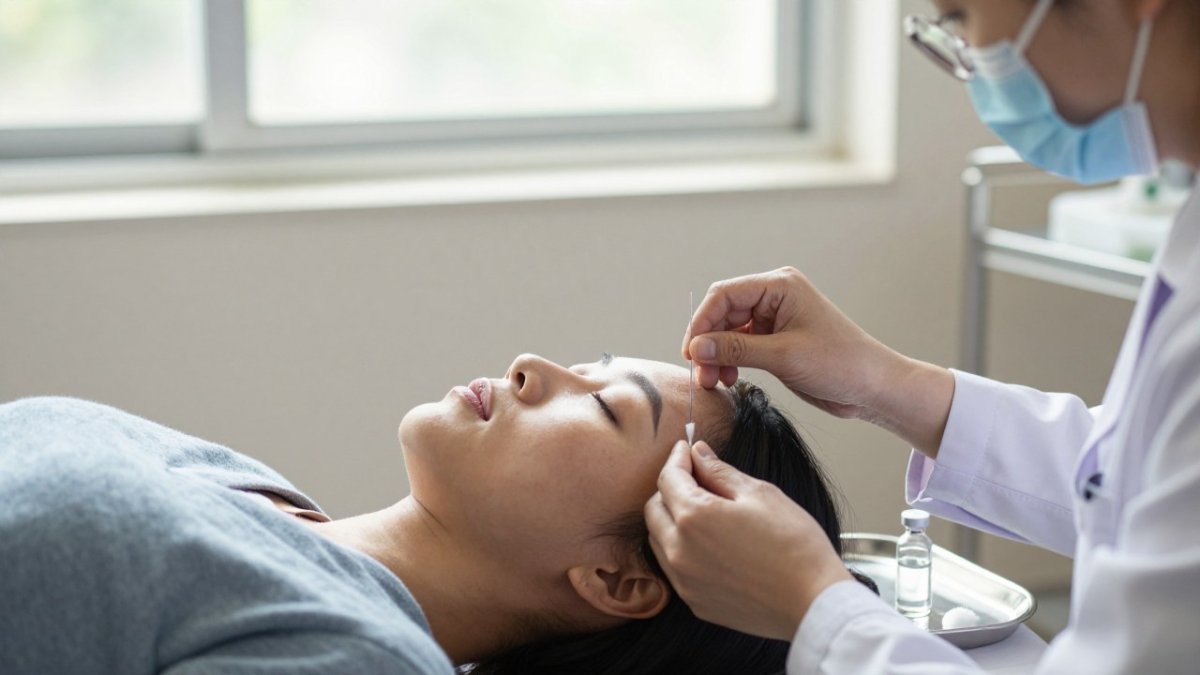
 How-to
Does Acupuncture Help Tension Headaches?
Last Updated: November 12, 2026
Quick Summary
Acupuncture tension headaches may ease muscle tightness and calm the nerve signals that keep pain going, though the evidence is mixed and results vary from person to person. It is generally used as part of a broader plan rather than as a stand-alone treatment.
- Tension headaches often come from muscle strain in the neck, scalp, and jaw.
- Sessions usually involve needles on the head, neck, hands, and feet with about 20 to 30 minutes of rest.
- Some people notice relief after one session, while others need a few weeks.
- Side effects are usually mild, like small soreness or a tiny bruise that fades quickly.
- Confirm a current state license and sterile, single-use needles before booking.
Table of Contents
- How Acupuncture Targets Tension Headaches
- What Happens During an Acupuncture Session
- Acupuncture for Chronic Tension-Type Headache
- How Long Does Acupuncture Take to Work for Headaches?
- Acupuncture Side Effects for Headaches
- Acupressure for Tension Headaches at Home
- Choosing a Qualified Acupuncturist and Talking to Your Doctor
- Ask About the Tox'd Club for Jaw Tension Relief
- Frequently Asked Questions
How Acupuncture Targets Tension Headaches
Acupuncture uses thin needles placed at specific points on the body and is one non-drug option that some people explore for tension-type head pain. The general goal is to ease muscle tightness and calm the nervous system signals that keep pain going.
Tension headaches are the most common headache type (Tension-type headache). They often come from muscle strain in the neck, scalp, and jaw. Acupuncture targets those areas directly.
Here is how it is generally thought to work:
- Muscle release: Needles relax tight bands in the neck and shoulders.
- Nerve signaling: Needling may change how the body sends and reads pain signals.
- Blood flow: Better circulation can ease built-up tension.
- Endorphins: The body's own pain-relief chemicals may rise after treatment.
The evidence is mixed. Some people report fewer headache days and less intensity, and results vary from person to person. It is generally used as part of a broader plan rather than as a stand-alone treatment.
Tension Headaches vs. Other Headache Types
Tension headaches feel like a tight band around the head. Pain is usually mild to moderate and on both sides. There is no throbbing, and light or sound rarely bother you.
Migraines are different. They often hit one side, throb, and come with nausea or light sensitivity. Cluster headaches are severe and strike one side of the head, often around the eye.
Knowing your type matters. Treatment choices change based on the diagnosis. If you are comparing options, our 7 Botox tension headache facts give a quick rundown of how neuromodulators fit into headache care.
What Happens During an Acupuncture Session
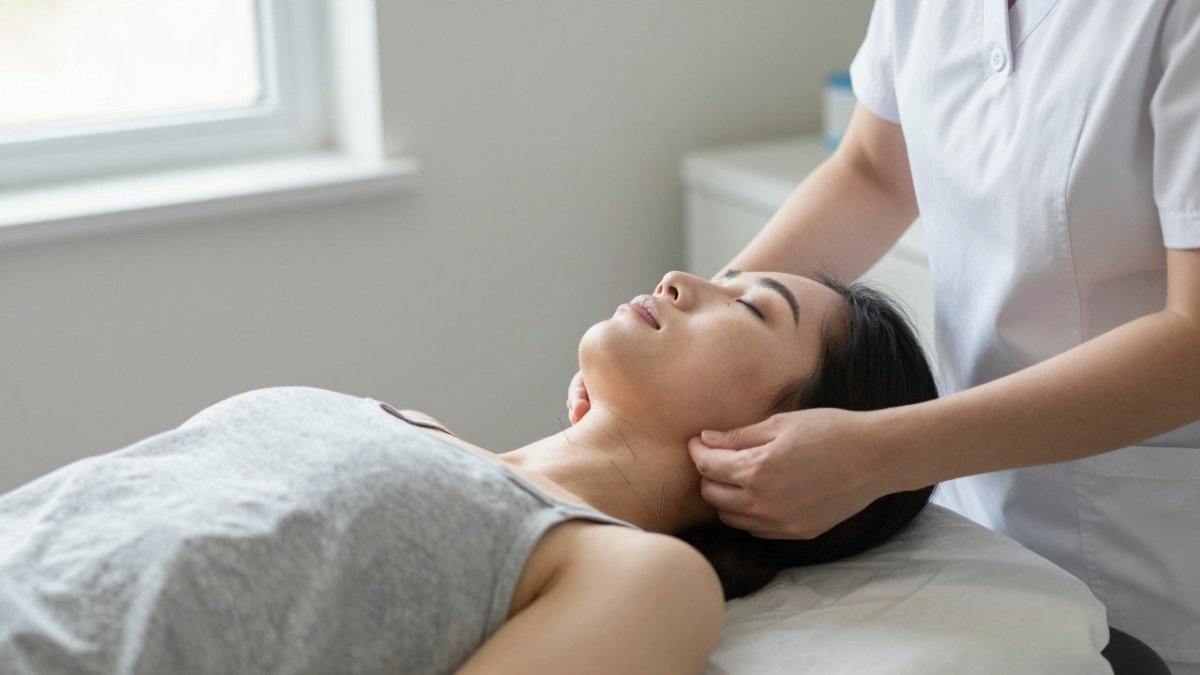
Acupuncture sessions generally involve lying down while a practitioner places fine needles, followed by a short rest.
Before, During, and After Treatment
Before: You share your history, headache pattern, and triggers. Wear loose clothing so the neck and shoulders are easy to reach.
During: Needles go in at points on the head, neck, hands, and feet. You rest for about 20 to 30 minutes. Many people feel relaxed or sleepy.
After: Most return to normal activity right away. Some feel tired for a few hours. Mild soreness at needle sites is common and short-lived.
Here is the general flow of an acupuncture session, from intake to the minutes afterward.
| Stage | What happens | Notes |
|---|---|---|
| Before | Share history, headache pattern, and triggers | Wear loose clothing for neck and shoulders |
| During | Needles placed on head, neck, hands, and feet | Rest about 20 to 30 minutes |
| During | Many people feel relaxed or sleepy | , |
| After | Most return to normal activity right away | Some feel tired for a few hours |
| After | Mild soreness at needle sites is common | Short-lived |
Acupuncture for Chronic Tension-Type Headache
Chronic tension-type headache means headache on most days for months. This form is harder to treat and often needs a combined approach. Acupuncture for the chronic form is generally used alongside stress management, sleep habits, and medical care.
For a deeper look at treating ongoing head pain, our complete guide to Botox for chronic tension headaches covers how neuromodulators are used for chronic cases.
How Long Does Acupuncture Take to Work for Headaches?
Some people notice relief after one session, while others need a few weeks. Timing varies by person.
Response varies by person. Track your headache days in a simple log so you and your provider can judge progress with real data.
Acupuncture Side Effects for Headaches
Acupuncture side effects for headaches are usually mild and fade quickly. The most common is small soreness or a tiny bruise where a needle went in. Some people feel lightheaded or tired after a session.
Serious problems are uncommon, and risk is generally lower when a trained, licensed practitioner uses sterile, single-use needles. Still, tell your provider about blood thinners, bleeding disorders, or pregnancy before treatment. Skip a session if you have an active skin infection near a needle point.
Watch out: going to an unlicensed provider or one who reuses needles raises the risk of infection. Always confirm licensing first.
Acupressure for Tension Headaches at Home
Acupressure uses finger pressure instead of needles, and some people use it as a self-care option between professional sessions.
- Temples: Press lightly with two fingers in small circles.
- Base of skull: Find the hollows behind the head and press upward.
- Hand web: Squeeze the fleshy point between thumb and index finger.
If you want more drug-free, at-home options, explore our guide to natural alternatives to Botox for tension headaches.
Choosing a Qualified Acupuncturist and Talking to Your Doctor
Start with your doctor. Share your headache pattern and ask whether acupuncture fits your situation. Bring a list of medicines and any health conditions.
Then check credentials:
- Current state license to practice
- Sterile, single-use needles
- Clean, calm treatment space
- Clear answers about training and experience
- Willingness to coordinate with your doctor
Ask how many sessions they suggest and how progress will be measured. A good practitioner welcomes questions. Ready to talk through your options? Our Botox guide and common questions show what to expect from a consultation.
Ask About the Tox'd Club for Jaw Tension Relief
Jaw tension often travels with tension headaches. Clenching and grinding strain the muscles that trigger head pain. If jaw tightness is part of your picture, our team at Get Tox'd treats jaw tension with Botox, Xeomin, and Dysport, dosed by licensed medical providers.
Our flat-rate pricing is based on treatment area, with unlimited units included in the treatment price. Free touch-ups are included with main treatments, and The Tox'd Club makes regular care easy to keep up.
For the full picture on treating jaw tightness, read our guide to Botox for jaw tension. Then ask us about The Tox'd Club and build a plan that fits your schedule.
Tension headaches can wear you down, and finding relief often takes a mix of approaches. If jaw tension is feeding your head pain, Get Tox'd can help. Our licensed medical providers offer flat-rate Botox, Xeomin, and Dysport with unlimited units, free touch-ups, and membership savings. Get started with Get Tox'd and take the guesswork out of your care.
Frequently Asked Questions
Can acupuncture relieve tension headaches?
Acupuncture is used by many patients to ease tension headaches, and some studies suggest it can reduce how often they occur. Results vary from person to person, and it works best as part of a broader plan that includes stress management and, when needed, medical care. If you are considering acupuncture tension headaches treatment, ask a licensed provider whether it fits your situation and keep your primary care doctor informed.
How many acupuncture sessions may be needed for tension headaches?
There is no single schedule that fits everyone. Many providers suggest trying a short series of sessions, often once or twice a week for several weeks, then judging whether your headaches have changed. How long acupuncture takes to work for headaches depends on how long you have had them, how often they occur, and how you respond. Track your symptoms between visits so you and your provider can decide whether to continue.
Is acupuncture or acupressure better for tension headaches?
Acupressure and acupuncture both target the same pressure points, but acupressure uses finger or thumb pressure instead of needles. Acupressure for tension headaches can be done at home and costs nothing, which makes it a reasonable first step. Acupuncture requires a licensed practitioner. Many people use both: professional sessions for ongoing care and self-applied pressure when a headache starts.
When should I seek medical care for a headache?
Get urgent medical care for a sudden, severe headache that peaks within seconds, a headache with fever and stiff neck, confusion, weakness, vision changes, or one that follows a head injury. Also see a doctor if headaches are getting worse, wake you from sleep, or do not respond to your usual care. Acupuncture side effects for headaches are usually mild, but tell your provider about any new or worsening symptoms.