 how-to
Is It Safe to Get Botox While Pregnant? 7 Facts to Know
Last Updated: October 26, 2026
Quick Summary
It is not considered safe to get Botox while pregnant, and clinicians generally advise against it. The caution exists because no controlled human studies have proven botulinum toxin safe in pregnancy, not because harm has been confirmed. Cosmetic treatment is elective, so most providers recommend waiting until after pregnancy and breastfeeding.
- The FDA has not formally approved botulinum toxin for use during pregnancy.
- No controlled human study has confirmed whether botulinum toxin crosses the placenta in pregnant women.
- After accidental exposure, note the injection date, product name, treated areas and approximate units.
- Muscle weakness, drooping eyelids, difficulty swallowing, slurred speech or breathing changes warrant immediate medical attention.
- Most providers suggest waiting until after delivery, and often after breastfeeding, before resuming cosmetic injections.
Table of Contents
- Botox While Pregnant: What the Evidence Actually Shows
- Does Botox Cross the Placenta?
- What If You Accidentally Got Botox While Pregnant?
- Botox Alternatives During Pregnancy
- When to Resume Botox After Pregnancy
- Botox and Breastfeeding: What to Know
- Questions to Ask a Clinician Before Your Next Appointment
- Frequently Asked Questions
Botox While Pregnant: What the Evidence Actually Shows
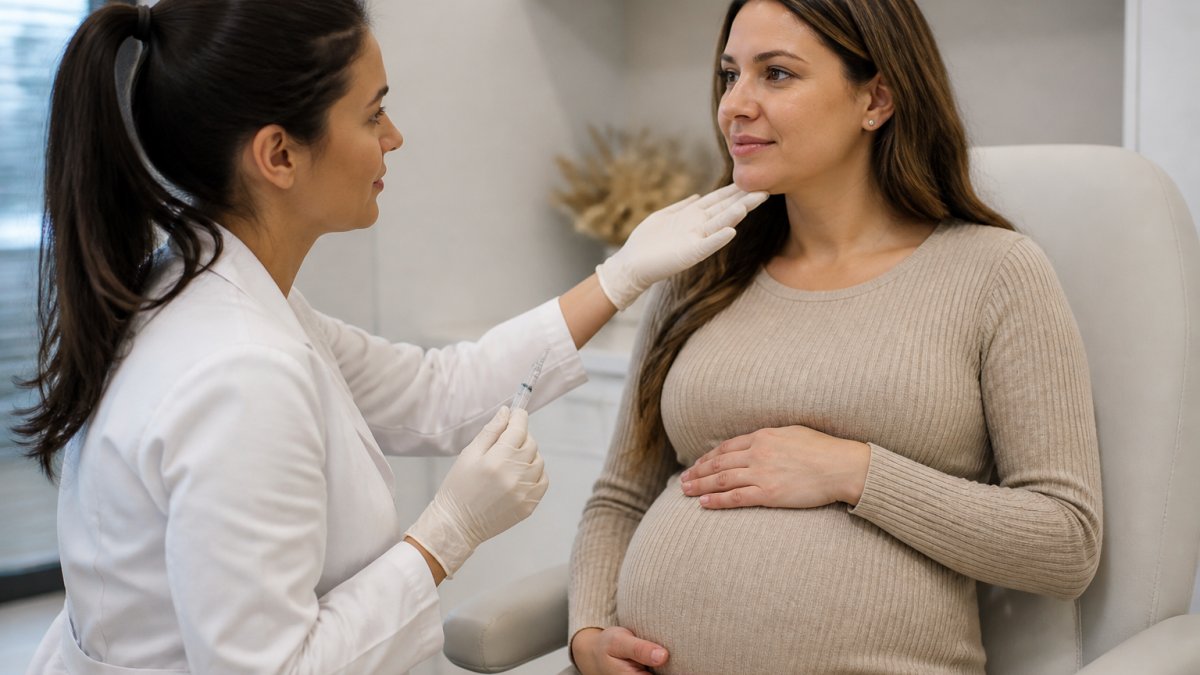
If you're wondering whether it's safe to get Botox while pregnant, the short answer is no: clinicians generally advise against it. The reason isn't that botulinum toxin has been proven harmful in pregnancy. It's that nobody has run the controlled human studies that would prove it safe. At Get Tox’d, your safety always comes first. That’s why we recommend postponing cosmetic tox treatments during pregnancy and taking the time to understand why.
Here's what that means in practice.
Botox while pregnant sits in a gray zone of medicine. The toxin is a large protein molecule, and injectors use small, localized doses. Many clinicians believe systemic absorption is minimal. However, since safety during pregnancy hasn't been established, it's best to take a cautious approach and wait until your provider says it's appropriate to resume treatment.
Below, we'll walk through what the evidence shows, what to do if you were injected before you knew, and how to plan your return.
Why Cosmetic Treatment Is Usually Put on Hold
Cosmetic injections are elective. That single word drives most of the guidance.
When a treatment is optional, the risk-benefit math changes completely. Most providers recommend waiting until after pregnancy and breastfeeding rather than taking unnecessary risks when safety data is limited.
The FDA hasn't formally approved botulinum toxin for use during pregnancy. The old pregnancy letter categories, including Category C, were retired years ago in favor of narrative labeling, but the underlying message stayed the same: human data is limited.
So the recommendation isn't based on proof of harm. It's based on the absence of proof of safety.
Medical Botox Is a Different Conversation
Therapeutic treatment is where the picture gets more nuanced. Botulinum toxin is FDA-approved for chronic migraine, cervical dystonia, muscle spasms, and severe underarm sweating, among other conditions. A neurologist treating disabling migraines may weigh the risks differently than a provider smoothing glabellar lines.
That decision belongs to your specialist, not to a general guide. If you rely on Botox for a medical condition, tell your obstetrician and your treating physician early. They can assess your specific situation together.
For a fuller look at the medical uses of botulinum toxin, see our breakdown of Botox beyond wrinkles.
Does Botox Cross the Placenta?
No controlled human study has confirmed whether botulinum toxin crosses the placenta in pregnant women. That's the honest answer, and it's the reason for the caution.
What we know comes from animal studies and case reports, not from large trials in people. Animal data has raised questions about fetal development at certain doses, but animal results don't translate cleanly to human injections. Case reports of pregnant women who received Botox exist, and many describe normal outcomes, but case reports can't prove safety. They only describe what happened in a handful of cases.
There's also the question of systemic absorption. After a cosmetic injection, a small amount of toxin could theoretically enter the bloodstream. The doses used cosmetically are low, and the molecule is large, which is why many experts consider the risk low. But low is not zero, and the data simply isn't there to say more.
If you want the deeper safety picture, our team has written about what medical research says about Botox safety.
What If You Accidentally Got Botox While Pregnant?
First, take a breath. This is a common scenario: many people receive cosmetic botulinum toxin injections in the weeks before a positive pregnancy test, often during the earliest and most sensitive stage of fetal development. The published record, mostly individual case reports and small physician surveys, does not show a clear pattern of harm from cosmetic doses, but it also cannot prove safety. The right response is calm, organized follow-up, not alarm.
What is actually known, and what isn't
It helps to separate the evidence into tiers, because headlines and forum posts tend to blur them:
- Animal studies have raised questions about fetal development at certain doses, but animals metabolize and respond to botulinum toxin differently than humans, and the doses used in those studies often exceed cosmetic human doses.
- Case reports describe pregnant people who received botulinum toxin and later delivered healthy babies. These are reassuring anecdotes, not proof; case reports capture only what happened in a handful of cases and are subject to reporting bias.
- Physician surveys suggest most practitioners who responded have not observed adverse pregnancy outcomes after cosmetic exposure, but surveys rely on recollection and cannot establish cause and effect.
- Controlled human trials, the kind that could actually answer the safety question, have not been conducted in pregnant people, and are unlikely to be for ethical reasons.
That hierarchy is why clinicians say "avoid unless medically necessary" rather than "known to be dangerous." The precaution is built on missing data, not on demonstrated harm.
Book now your FREE consultation →
A practical step-by-step after accidental exposure
- Note the details while they're fresh. Write down the injection date, the product name (Botox, Dysport, Xeomin, Jeuveau, and Daxxify are all botulinum toxin type A but are dosed differently), the treated areas, and the approximate number of units. Your injector's chart has the exact figures, ask for a copy.
- Call your obstetric clinician's office. Tell them the injection date relative to your last menstrual period or estimated conception date. They can advise on routine monitoring and whether any extra follow-up makes sense.
- Tell your injector. Ask them to document the dose and product in your record and to flag any future appointments. Contact your obstetrician to discuss your exposure and any follow-up they recommend before scheduling another cosmetic treatment.
- Do not schedule another cosmetic appointment. This is the simplest risk-reduction step available.
- Watch for unusual symptoms. Muscle weakness, drooping eyelids, difficulty swallowing, slurred speech, or breathing changes are rare at cosmetic doses but warrant immediate medical attention. Report any of them to your clinician right away rather than waiting for your next visit.

What to bring to your appointment
A short, specific summary helps your clinician act quickly:
- Product name and manufacturer
- Total units and injection sites
- Date of injection and date of your positive test (or estimated conception)
- Any symptoms, even mild ones
- Whether you have had botulinum toxin before and how you responded
If you want the deeper safety picture, our team has written about what medical research says about Botox safety.
Botox Alternatives During Pregnancy
You can still prioritize your skin care and overall well-being during pregnancy. The key is choosing alternatives that are appropriate for you and checking with your healthcare provider before introducing new treatments or products.
For fine lines and skin care, topical routines are the first stop. Gentle cleansers, moisturizers, and sunscreen are considered safe. Many dermatologists advise avoiding high-dose retinoids during pregnancy, so check every product with your clinician before adding it.
For tension headaches, which are a common reason people seek Botox, non-drug approaches often help. These include:
- Physical therapy and gentle stretching
- Heat or cold packs on the neck and shoulders
- Hydration and consistent sleep
- Prenatal-safe massage
If you're specifically looking for non-injectable options for tension headaches, we've gathered natural alternatives worth discussing with your doctor.
For excessive sweating, antiperspirants and breathable fabrics can bridge the gap until you're ready to resume treatment.
When to Resume Botox After Pregnancy
Most providers suggest waiting until after delivery, and often until after breastfeeding, before resuming cosmetic injections. There's no single universal timeline, so the decision should come from your own clinician.
A practical approach many people follow:
- After delivery: wait until you've recovered and your provider clears you.
- If breastfeeding: discuss timing with your obstetrician and pediatrician.
- Before booking: confirm you're no longer pregnant and have stopped breastfeeding if that's your plan.
When you're ready, our Botox guide and FAQ covers what to expect at your first appointment back.
Botox and Breastfeeding: What to Know
Data on botulinum toxin during breastfeeding is even thinner than during pregnancy. The toxin is a large molecule, and experts generally believe very little passes into breast milk, but there are no controlled studies to confirm it.
Because of that gap, most providers recommend waiting until you've finished breastfeeding before resuming cosmetic Botox. If you have a medical need for treatment, your specialist can help weigh the trade-offs.
The cautious path isn't a judgment. It's just the honest reading of limited evidence.
Questions to Ask a Clinician Before Your Next Appointment
Come prepared. These questions get you clear answers:
- Is this treatment cosmetic or medical for me?
- What does the current evidence say about safety in pregnancy or breastfeeding?
- Which product are you using, and at what dose?
- What are the signs of an adverse reaction I should watch for?
- When can I safely resume treatment after pregnancy?
If you want to know exactly how a consultation works, see what to expect during a Botox consultation.
Situation | Recommended Action | Timing |
|---|---|---|
Planning pregnancy | Pause elective treatment | Before conception |
Already pregnant | Skip cosmetic Botox | Until after delivery |
Accidental exposure | Call your obstetrician | Right away |
Breastfeeding | Discuss with clinician | Usually wait |
Medical need | Specialist risk-benefit review | Case by case |
Frequently Asked Questions
Do celebrities get Botox while pregnant?
Some public figures have spoken about continuing cosmetic treatments during pregnancy, but anecdotal reports are not medical evidence. The FDA has not approved Botox for cosmetic use during pregnancy, and professional guidance generally recommends postponing elective injections until after delivery. If you see a celebrity claim, treat it as a personal choice rather than a safety endorsement, and discuss your own situation with your obstetrician before booking anything.
I accidentally got Botox before I knew I was pregnant. Is it safe?
This happens more often than people realize, especially in early pregnancy before a positive test. Call your obstetrician, share the date, dose and injection sites, and note any symptoms. Most case reports of early, low-dose cosmetic exposure have not shown a clear pattern of harm, but the evidence is limited. Your doctor can assess timing relative to conception and recommend monitoring. Do not panic, but do not skip the conversation.
Can you get Botox while breastfeeding?
Breastfeeding is treated similarly to pregnancy in most clinical guidance: cosmetic Botox is generally deferred until nursing ends. There is very little human data on how much botulinum toxin passes into breast milk, and the absence of evidence is not proof of safety. If you are considering treatment while nursing, raise it with your OB and your baby's pediatrician first. Many providers will ask you to wait until you have finished breastfeeding.
What can I do instead of Botox when pregnant?
For fine lines and wrinkles, topical skin care with pregnancy-safe ingredients, good sun protection and hydration are the main options. For chronic migraines, tension headaches or jaw clenching, talk to your OB about pregnancy-compatible treatments such as physical therapy, massage, heat, and approved medications. For excessive sweating, clinical-strength antiperspirants and breathable fabrics can help. Any alternative should be cleared with your obstetrician before you start.
When you're ready to return to cosmetic tox treatments, Get Tox’d is here to help you understand your options. We offer flat-rate pricing, unlimited units within your treatment plan, and complimentary touch-ups when appropriate, so you know what to expect before your appointment.